Showing posts with label Louis Sullivan. Show all posts

Monday, December 12, 2022

Architecture by Artificial Intelligence. Too soon?


Are architects no longer needed to come up with ideas?

Can we get the new Artificial Intelligence engines to dream up ideas for our projects, and others to then draw them up to get consented, and built?

Just for fun, I had a look at the DALL-E engine, that spits out images created on the spot, however crazy your request. 

I tried a few phrases based on current projects.

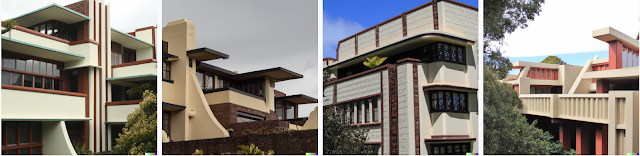
These four below were generated by the search term 'Auckland apartments by Frank Lloyd Wright' ...


... Auckland apartments by John Lautner


... Auckland apartments by Louis Sullivan

... New Zealand apartments by Louis Sullivan

... Aotearoa apartments by Louis Sullivan

... Wellington apartments by Louis Sullivan


A Usonian house in Auckland

... Usonian house in Aotearoa

... Usonian House in New Zealand

... John Lautner house in New Zealand


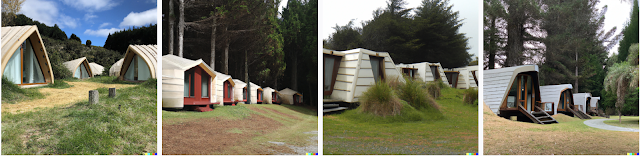
John Lautner glamping cabins in New Zealand

... John Lautner glamping cabins in Aotearoa

... Frank Lloyd Wright glamping cabins in Aotearoa


... Frank Lloyd Wright glamping cabins in New Zealand

... Richard Neutra  glamping cabins in New Zealand


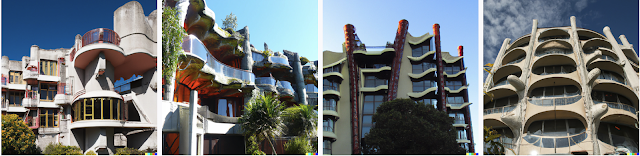
... Bruce Goff apartments in Aotearoa


... Bruce Goff apartments in New Zealand


... Bruce Goff apartments in Auckland
... Carlo Scarpa apartments in Auckland

... Pier Luigi Nervi apartments in New Zealand


... Pier Luigi Nervi apartments in Aotearoa


... Carlo Scarpa apartments in Aotearoa


... Carlo Scarpa dream home in Aotearoa


... Frank Lloyd Wright dream home in Aotearoa

... John Lautner dream home on Auckland beach

... Richard Neutra dream home in New Zealand


I'm not convinced the architects named would recognise the work as their own. 

But what say you: Are local architects redundant yet? Any of these buildings here that you'd like to order up?


Thursday, July 04, 2019

Recent Project: Malvern Hills: 'Wind Screen'


I've been dreadful at posting new projects here, mainly because I've been busy designing them rather than posting about them, but I'd like to catch up a bit. There are quite a few to show you!

This project here began being discussed two years ago. It's for a very exposed very steeply sloping site in Wellington. That's just Wellington, right -- but this one is a little different: with the very steeply sloping site comes striking views right across the harbour: which makes it extremely exposed -- both to the public eye and to the weather.

And as they say, Wellington doesn't have a climate. It has weather.

The strategy, a simple one, is to hang the house between the retaining walls that are needed to hold up the street, and the cantilever beams sprouting in pinwheel fashion from a single large concrete pile. This takes account of the sloping-site problem. One enters and sleeps at the top level, lives on the middle level, and offers children and guests sleeping and play space at the bottom.

Did I say "simple"?
Once out of the ground, the house needs to deal with the weather problem. Because this house doesn't just have slope: with that slope comes both the spectacular views over the harbour that make it worth building there, and all the winds of Aeolus sent to batter anyone daring to step outside to see it.

Trouble. But as they say, problems are an architect's friend!

View from the proposed roof terrace: spectacular view; spectacular wind!
So how to solve this problem? The answer is a "wind screen" built around the drum containing our lower floor and protected terraces.

Add these windscreens around the outer drum, intersect this with the main circular drum, add trees and vines, mix all ingredients sagaciously on this sloping site and you have this house -- or nearly so. From there it almost designs itself!


Concept

Concept Plan

The house that designs itself:
add retaining walls and one three-storey drum to a sloping site; to that add
an intersecting drum with wind-screen,
an open terrace extending the view back to the city,
and trees and vines
and voila!


Can you see this rising from the hills above the Wellington Harbour? A strong form making it easily seen even at great distance.

And while the screen looks a little 'heavy' in the pictures, our windscreen is an almost diaphanous perforated metal screen, lightweight, decorated and visually permeable. A light steel veil draped over the drum and cinched down tight; a "breathable" screen, with sections easily slid away on Wellington's intermittent but glorious good days.

This Cultural Centre in Corsica gives you an idea of just how visually permeable a fine-grained steel 'veil' can be:


Cultural Centre in Bastia, by Paris Studio DDA
And this house in Israel shows how permeable (yet still sheltered) a coarse-grained perforated screen can be.

Pitsou Kedem's 'MA' House' in Israel
And this here is our screen, suggesting how decorated our screens can be; perforated metal being an ideal material to take integral decoration, we have added ornament based upon the interlocking circles of our two "drums." The effect in the sun is dramatic!:


Visually permeable perforated decorated metal screen, rejoicing in the sunlight (above) -- and rendered in red below:


Drums in the sun

The perforated metal is used to create a see-through screen that offers protection from the wind on the main terrace overlooking the harbour, with other open decks (that can be used on better days) that take the visitor further out to enjoy views over the central city.

View out to open terrace
 The perforated metal drum continues from base to top floor, piercing floors all the way up to form the balustrade at our entry level. Each of our levels, of course, enjoy spectacular views!

View from day bed on upper level
View from built-in seating at 'back' of lounge
These axonometric cutaway plans of each level should give you some idea of how it all comes together ...


[Hat tips, of course, to Sullivan, Botta, Melnikov..]

Sunday, October 22, 2017

Quote: 'Why It's Okay To Like Ornament'


"[Louis] Sullivan’s ornament never feels as though it is imposed from without. It does not feel applied. Instead, his ornament really does manifest what 'organic' is actually supposed to feel like, 'as though the outworking of some beneficent agency had come forth from the very substance of the material and was there by the same right that a flower appears amid the leaves of its parent plant.'” 
~ Barbara Lamprecht, from Part IV of her book/article 'Why It's Okay To Like Ornament,' quoting Michael Lewis


"This greatest feature of [Louis Sullivan's] work was esoteric. Is it any the less precious for that? 
    "Do you realise that here, in his own way, is no body of culture evolving through centuries of time but a scheme and 'style' of plastic expression which an individual working away in this poetry-crushing environment ... had made out of himself? Here was a sentient individual who evoked the goddess whole civilisations strove in vain for centuries to win, and wooed her with this charming interior smile -- all on his own, in one lifetime too brief. ... Although seeming at time a nature-ism (his danger), the idea is there: of the thing not on it; and therefore Sullivanian self-expression contained the elements and prophesied organic architecture. To look down on such efflorescence as mere 'ornament' is disgraceful ignorance. We do so because we have only known ornament as self-indulgent excrescence ignorantly applied to some surface as a mere prettification. But with the master [Sullivan], 'ornament' was like music; a matter of the soul..." 
~ Frank Lloyd Wright writing in his book Genius and the Mobocracy about the only man he ever called his Master


.

Sunday, January 22, 2017

Quote of the Day: Form ever follows function …


“[T]o the steadfast eye of one standing on the shore of things … the heart is ever gladdened by the beauty, the exquisite spontaneity, with which life seeks and takes on is forms in an accord perfectly responsive to its needs. It seems ever as though the life and the form were absolutely one and inseparable, so adequate is the sense of fulfilment.
    “Whether it be the sweeping eagle in his flight or the open apple blossom, the toiling work horse, the blithe swan, the branching oak, the winding stream at its base, the drifting clouds, over all the coursing sun, form ever follows function, and this is the law. Where function does not change form does not change. The granite rocks, the ever brooding hills, remain for ages; the lightning lives, comes into shape, and dies in a twinkling.
    “It is the pervading law of all things organic and inorganic, of all things physical and metaphysical, of all things human and all things superhuman, of all true manifestations of the head, of the heart, of the soul, that the life is recognisable in its expression, that form ever follows function. This is the law.
    “Shall we, then, daily violate this law in our art? Are we so decadent, so imbecile, so utterly weak of eyesight, that we cannot perceive this truth so simple, so very simple?”

~ Architect Louis Sullivan, in his 1896 article ‘The Tall Office Building Artistically Considered

.

Wednesday, September 10, 2014

Restoring Wright Buildings with 3d printing


Frank Lloyd Wright’s Millard House or “La Miniatura”

While everyone has been talking about trying to 3d print houses, Frank Lloyd Wright’s ‘textile block’ buildings are being restored for pennies in the pound with 3d printed textured blocks.

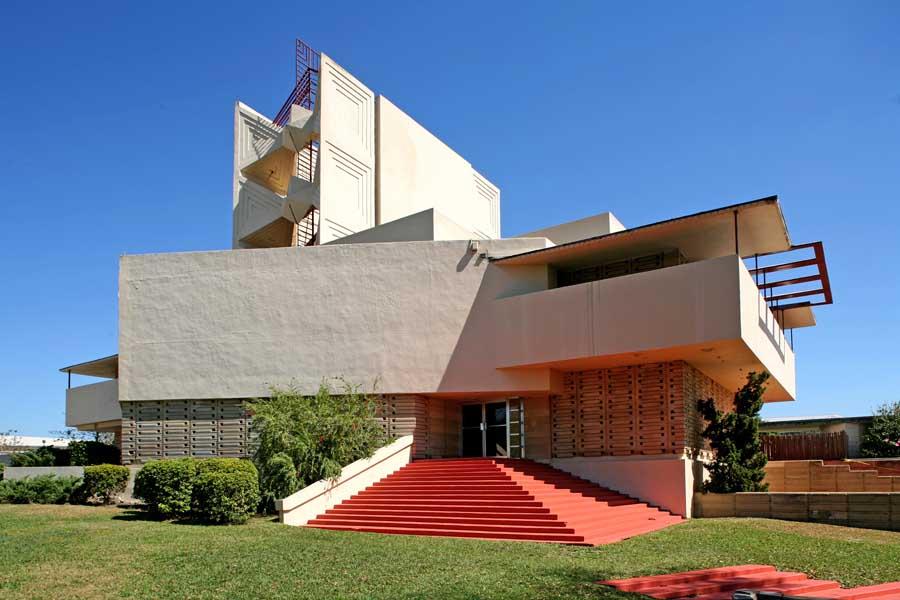
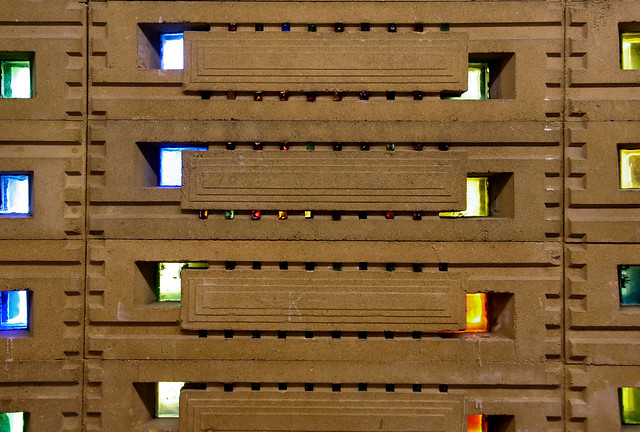
His Annie Pfeiffer Chapel at Florida Southern College—part of a composition of twelve buildings at the South Florida campus designed as a “harmonious whole expressing the spirit of the college free from grandomania:--has had a makeover with the help of 3d-printed textile blocks replacing weathered and aged blocks.

The cost to recast Wright’s blocks by hand proved prohibitively expensive in the past…until the arrival of the affordable 3D printer.
    Thanks to a $50,000 grant from the Florida Division of Historical Resources and the emergence of affordable 3D printing technology, the Annie Pfeiffer Chapel was
recently restored in exacting architectural detail.
    Architect Jeff Baker of
Mesick Cohen Wilson Baker Architects oversaw the 12-month grant project, turning to the aid of 3D printers to replicate and replace what was once a tedious manual process. 3D printing significantly reduced both cost and effort to complete the architectural restoration, allowing Baker’s team to integrate 2,000 distinctive coloured glass tiles into Wright’s original design textile blocks, recreating the jewelled box effect envisioned by the architect.
    “The success found on this project is a milestone not only in the restoration of Frank Lloyd Wright buildings on the FSC campus but also for similar textile block projects designed by Wright and other architects throughout the nation,” enthused Baker.

This opens up possibilities not just for restoration, but for new textile block buildings as well.

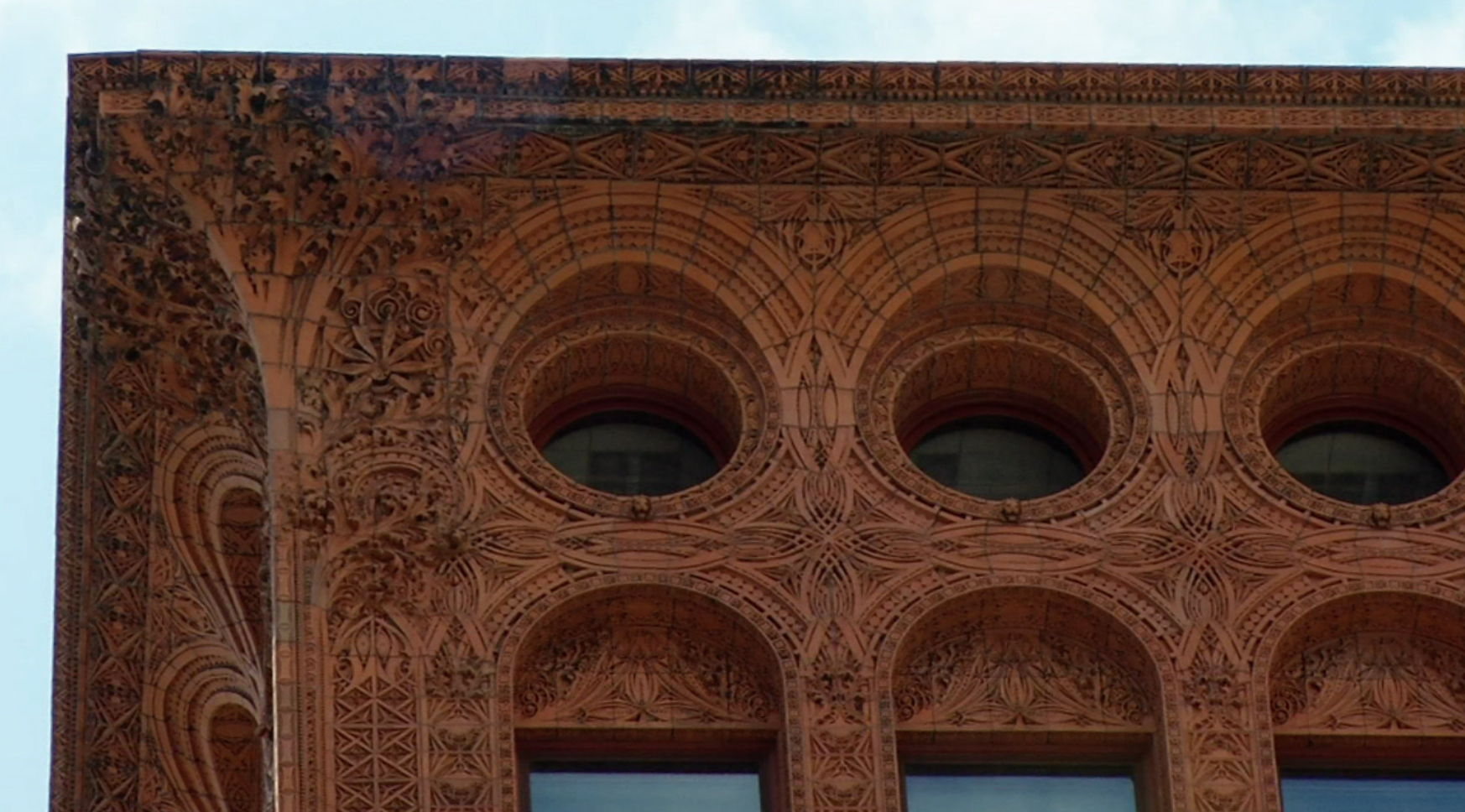
And not just new textile buildings – new and economical methods of applied ornament as well. Just imagine what Wright’s master Louis Sullivan could have done with a few industrial 3d printers!

Coping of Louis Sullivan’s Wainwright Building


[Pics from http://prairieschoolarchitecture.tumblr.com/, Florida Rambler, Design Milk, When the Sidewalk Ends and 3dprint]